YINKA ANSWERS THE CALL: Meet the 2026-27 RI President
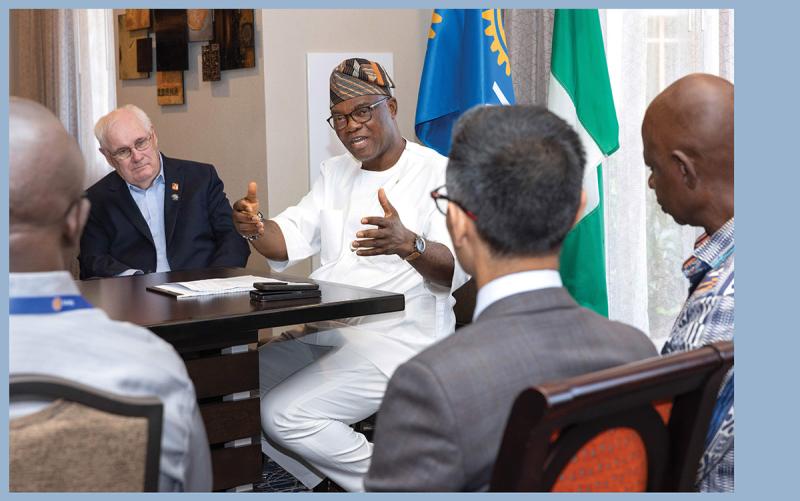
Olayinka H. Babalola’s leadership journey began early. The eldest of six children, he was born in Ibadan, one of the largest cities in Nigeria. His mother was a teacher and his father an accountant. “From my part of the world, when you’re the first child, that has some leadership responsibilities,” he says.
He went to college at what was then called the Federal University of Technology in Bauchi, an ethnically diverse city in the north where Nigeria’s savanna woodlands begin to give way to the semiarid Sahel on the edge of the Sahara. The school’s public image director, a member of the Rotary Club of Bauchi, asked him during his second year if he’d help organize a Rotaract club. Babalola became the club’s charter president.
After earning his degree in electronics engineering, Babalola completed a year in the National Youth Service Corps. Aiming to bridge ethnic and religious divides, members of the corps serve in states other than their own. Babalola was posted to Port Harcourt in Rivers state, where the French tire manufacturer Michelin had requested electronics engineering graduates to help retool its equipment.
Before arriving in Port Harcourt, Babalola joined other newly mobilized corps members at an orientation camp. He figured since they were all fresh out of university, there must be Rotaractors among them. He posted a notice and gathered everybody together. “We started a mini Rotaract fellowship while in camp,” he recalls.
Then in Port Harcourt, Babalola joined the Rotaract Club of Trans Amadi, an industrial area of the city where Michelin was located. With other Rotaract corps members, he volunteered at a facility for children with disabilities that was supported by the Rotary Club of Port Harcourt.
When his mandatory service was over, Babalola landed a job with the Nigerian branch of the Shell oil company. Only in his mid-20s, he was beginning to outgrow his Rotaract club; his job gave him the privilege of a better income than others his age. The next logical step, he thought, was to join Rotary, where he could find inspiration from successful older members. “I wanted to be in a place where I could aspire to other things,” he says.
But when he went to a meeting of the Rotary Club of Trans Amadi and said he wanted to join, club members were stunned. One Rotarian erupted: “What’s wrong with this young man? You think this is how you join Rotary?” But another Rotarian volunteered to be his sponsor, later becoming a mentor. “If that man hadn’t spoken up for me, maybe I wouldn’t be here,” Babalola reflects. “I may have left the place and never considered joining Rotary, and that would have been the end of it.”
In Rotary, Babalola found career mentors, including the chief operating officer of Shell Nigeria. “There are some people who when you see their signature on a letter addressed to you, it means only two things: You’ve been promoted or you’ve been sacked,” he says. “That’s the kind of person he was.” Another executive in the Nigerian oil industry also took Babalola under his wing when his father died.
But most of all, he found a place to grow up. “At 27, you have some money in your pocket, you’re single, you’re a boy, you can imagine the kind of things that will be on your mind,” he says. “But because I was in Rotary, that didn’t happen for me. People are talking about taxation; they’re talking about the budget. They’re talking about real estate, about investment opportunities, and suddenly somebody is telling you what you need to do with your money.”
Through Rotary, Babalola also met his wife, Precy, the first female president of her university’s Rotaract club in Port Harcourt. She pulled back from Rotary when their children were young, rejoining in 2018. Today she is a lawyer and a member of the Rotary Club of Port Harcourt Passport.
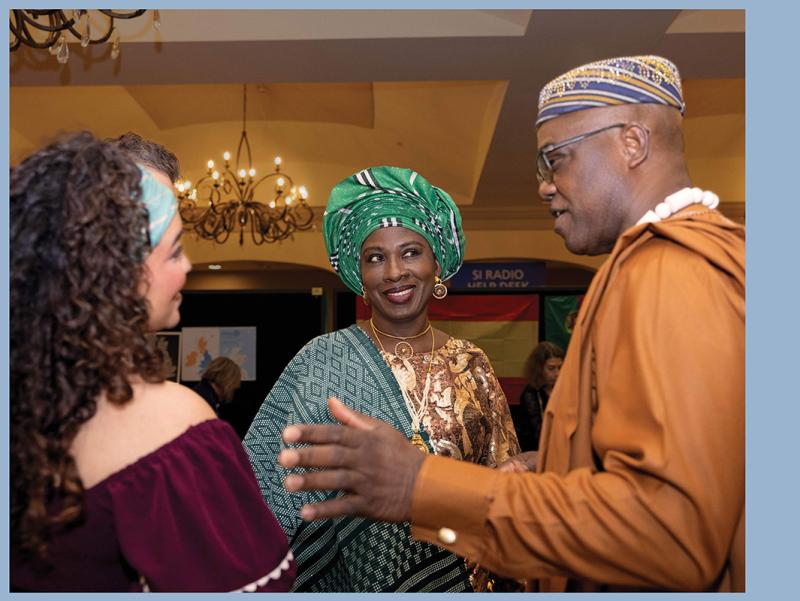
“Our stories as members may be different, but Rotary impacts us in many ways — our careers, our businesses, our family lives,” Yinka Babalola says. “I think if you talk to any Rotarian, you will find they have a story, something that made them stay.”
“There’s something about Yinka and membership,” says Virginia Major, a past district governor from Port Harcourt and one of many whom Babalola has mentored. “Oh, my goodness. He almost drives you crazy because of membership. He gives you figures. ‘This is where we need to be.’ ‘We need to do this, and we can.’ I call him the father of membership in Africa."
Babalola may be only the second president from Nigeria, the second from Africa. But true to Rotary’s values, he will build peace as he travels, promoting understanding of the people of a country, beyond the headlines. He himself will be creating lasting impact, on Rotary, on the world.