Polio Experts Report on Eradication Effort
Current leaders of the four-decade campaign to eradicate polio expressed confidence in the effort at the Rotary International Convention in Taipei, Taiwan, saying on 15 June that the promise of a polio-free world can be achieved.
“I think we could even see the last case of wild poliovirus in Pakistan this year,” Michael K. McGovern, chair of the International PolioPlus Committee, said after the session.
“Some years we have disappointments. There are international factors that affect our progress,” added McGovern, a member of the Rotary Club of South Portland-Cape Elizabeth, Maine, USA. “This year, there’s been some political turmoil. Obviously, there are wars going on. But I just sense that we’re on track. We have more resilience to overcome the issues that come up, and vaccine refusal rates are the lowest they’ve ever been. Everything seems to be ticking in the right direction.”
That optimism was echoed by Johrita Solari, chair of the Polio Eradication Advocacy Task Force for the United States, who called the eradication effort “the rare good news story.”
“We live in a world full of bad news,” said Solari, a member of the Rotary Club of Anaheim, California, USA. “Polio eradication is an inspiring example of the power of collective action, enduring commitment, and effective partnerships, with proven results. We’ve leveraged our respective strengths — Rotary volunteers, technical partners, [the World Health Organization,] UNICEF, and governments around the world — to reduce polio cases by 99.9% and sustain that progress. That’s something rare.”
The panel was among numerous breakout sessions on the second day of Rotary’s annual convention, which has brought together more than 37,000 people from around the globe. As in previous years, the session about polio was crowded with attendees seeking an update on Rotary’s signature cause.
While McGovern and the other panelists mainly emphasized the positive, they did express one warning. On social media and even in mainstream news sources, they said, false narratives are both widespread and pernicious. McGovern said the U.S. media failed to accurately report the level of congressional support for eradication.
“For five straight years, the U.S. government has appropriated US$265 million for polio eradication. If you read the news, you would never guess that,” he said.
Valarie Wafer, a member of the International PolioPlus Committee and the Rotary Club of Burlington Lakeshore, Ontario, Canada, said that Rotary members and their allies should fight misinformation with meaningful personal narratives. Finding new opportunities for people who have had polio to share their stories has a powerful effect, she said.
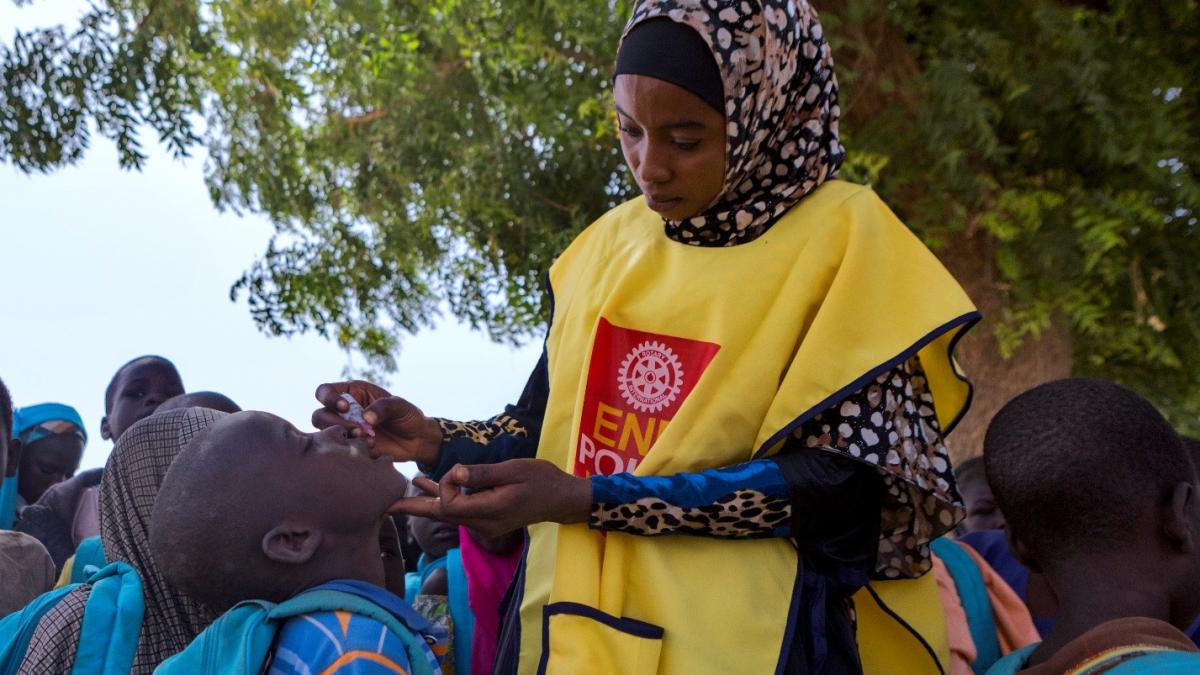
“Even in some of our challenging areas in Afghanistan and Pakistan, they’re actually employing polio survivors to go door to door with frontline [vaccination] workers,” she said. “You open the door, and your initial reaction may be to say no, but then you see somebody who actually had the disease, it’s affected their life, and they’re standing right in front of you. And you can see what might happen to your children if you’re not immunizing them.”